Sod Installation in Berea, KY | Richmond Sod Installation
Call (859) 694-9270 or use the homepage contact form.
What Lawn Needs Are Common Across Berea’s Housing Mix?
Richmond Sod Installation covers Berea for full lawn installs, patchy yard resets, and post-construction lawn recovery. Berea retains its own city focus and sits south of Richmond, Kentucky on the same Madison County clay that causes repeat lawn failures across central Kentucky.
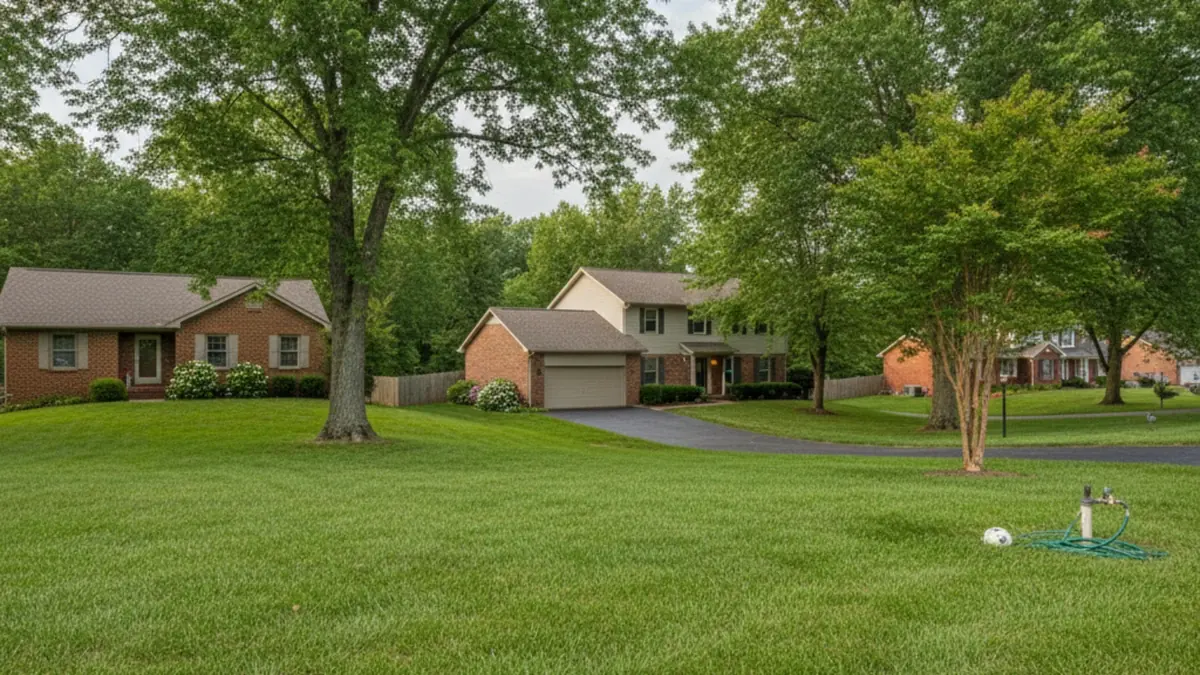
Berea has a mix of older residential neighborhoods, Berea College area properties, rental homes, and newer homes on the edges of town. Those property types create the same recurring lawn problems: compacted soil, neglected thin turf, bare front-yard patches, and yards that never respond to seed no matter how many times the homeowner tries again.
How Do Berea Soil, Grass Type, and Timing Affect Sod?
Berea is close enough to Richmond that the same rules apply: Madison County clay, Kentucky transition-zone weather, and a strong preference for fall installation. Late August through October gives tall fescue sod the best chance to root before summer heat arrives.
Tall fescue is Tyler's first recommendation for most Berea yards because it handles clay and summer stress better than Kentucky bluegrass in many residential settings. Kentucky bluegrass is available, but Berea homeowners with compacted or neglected lawns usually benefit from tall fescue's deeper root system. See the tall fescue sod page for the grass-type comparison, or the post-construction sod page if your yard was left bare by recent work.
What Does Sod Installation Typically Cost in Berea?
Berea projects typically range from $500–$2,500 for a partial yard reset to $1,500–$5,000 for a full sod installation. The final price depends on measured square footage, clay preparation, grading, topsoil needs, property access, drainage conditions, and whether failed turf or construction debris must be removed first.
- Full sod installation: $1,500–$5,000
- Partial reset or patchy section: $500–$2,500
- Pricing depends on prep, square footage, access, and whether topsoil or grading is needed.
What Should Berea Homeowners Know Before Installing Sod?
These answers cover Berea route distance, repeated seed failure, typical installation costs, tall fescue suitability, and the preparation needed before sod reaches clay. Homeowners should expect an evaluation of compaction, drainage, debris, topsoil, sunlight, access, and grading rather than a simple delivery-and-lay recommendation.
How far is Berea from Richmond, KY for sod installation?
Berea is about 10 miles south of Richmond and is available route. Tyler handles full lawn installs, partial resets, and post-construction sod recovery in Berea when scheduling and project scope fit.
Why does grass seed keep failing in my Berea yard?
Repeated seed failure in Berea is often caused by compacted Madison County clay, thin topsoil, poor drainage, shade, or neglected soil that will not support root establishment. If seed has failed in the same areas for multiple seasons, the soil condition needs to be diagnosed before another seeding attempt.
What does sod installation cost in Berea, KY?
Full sod installations in Berea typically run $1,500–$5,000. Partial yard resets or patchy section replacements usually run $500–$2,500. Final pricing depends on square footage, soil prep, access, and whether grading or topsoil is needed.
Is tall fescue a good sod choice for Berea, KY?
Tall fescue is often a practical first choice for Berea because its deeper roots can handle transition-zone heat and prepared clay better than Kentucky bluegrass in many residential yards. Sun, shade, and watering capacity still matter.
What happens before sod is laid on Berea clay?
The yard should be checked for compaction, low spots, drainage, debris, and usable topsoil. The surface is then prepared and graded so the sod makes firm soil contact instead of sitting on sealed clay.
How Can You Request a Berea Sod Quote?
Call (859) 694-9270 or use the contact form. Include the Berea address, what the yard currently looks like, approximate square footage, access details, recent construction or drainage work, and whether this is a full installation or partial reset. Those details help Tyler evaluate routing, preparation needs, and project scope.